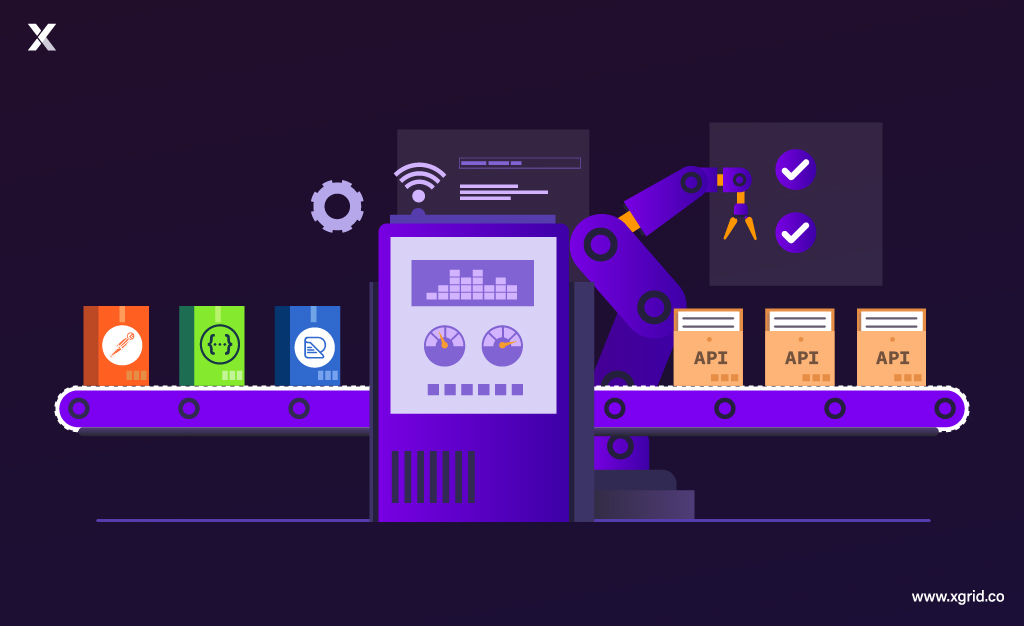
Mining the Secrets of Good Developer Experience through API Documentation

If APIs are eating the world, then think of API documentation as a cookbook! API documentation is a crucial component that helps users understand their APIs through a technical deliverable comprising all instructions needed to effectively consume the APIs. A good API cannot be used directly without a good set of documentation. Just like chefs lean on well-written recipes for creating wonderful dishes, similarly, you need to create well-consolidated documentation, which is easy to read and apprehend. 

At some point or another, most companies have built APIs for their customers or internal use. Depending upon the nature of their use, APIs can be  public, partner, or private. An OpenAPI is intended for a broader developer community allowing the owner to give universal access to consumers. These OpenAPIs or Partner APIs are only shared with a predefined group of users via authentication and authorization mechanisms for security purposes. When using the APIs, different kinds of calls and requests are sent between multiple software intermediaries, which then fetch several responses. Eventually, creating and maintaining good documentation becomes mandatory for the developer community.

Developers can help themselves when they code!

Here is a quick question, why should the developer spend time on communicating with the documentation engineers? What’s the gain for the developer? API documentation not only helps the stakeholders, but the technical guidance document is an essential constituent in PLC (product life cycle).

Some of the key benefits include:

  • Improved developer experience
  • Reduced onboarding time (internal developers & external clients)
  • Increased product maintenance
  • Facilitated API contracts/agreements
  • Decreased dependency specification
  • Enhanced API testing

API documentation lays the groundwork for a smooth developer experience. Newly hired developers can also comprehend the basic structure of APIs using the documentation. 


An Introduction to the API framework

To start off with the API consumption, authentication is a must. Users usually require to go through an Auth method to gain access to the APIs. Documentation engineers need to make sure that this section is properly documented to lay the foundation of successful authentication.  It is a better approach to provide your end-users with suitable information such that they are well aware of integrated API services. Mapping all your URIs with the correct methods to send requests and receiving the correct response is the main goal. API documents list all of the resources along with their possible responses to provide relevant outputs on an interactive console. The immediate testing helps users understand what they read in the API documentation with the live environment. Let’s see the basic structure of an API document:

  • Description
  • Authentication
  • Parameters
  • Code samples
  • Status & errors
  • Examples
  • Methods

The process for documenting APIs involves a series of steps. It starts from the resource description to gather the data points for the process. Once gathered, it leads to defining endpoints and methods involved with each API. Parameters are then decided for each method. Later, a request sample is added for the users to view the request template. Lastly, to fetch the response, having a response example is a must that is added to record the responses of each URI.


Tools for API documentation

Many text editors and API Documentation tools are traditionally used to generate the API content. Selection of the right tool is important to aggregate the experience of the developer when it comes to learning and integrating an API. A few famous tools include Swagger, Postman, and Redoc which are largely used to create, share and test APIs apart from documenting them. Let’s explore all three:

Swagger UI

Swagger UI is the most well-utilized tool for API documentation. It is a web-based interface for visualizing and testing OpenAPI Swagger definitions. Users can input the document in OpenAPI spec, a standard used for API documentation, using YAML or JSON formats to create a well functioning documentation. The beauty of swagger lies within its easy-to-comprehend syntax which when executed, comes with a direct Try it out feature to help the developers explore the URIs directly with just inputting the Host address.

Postman

Another tool for the quick deployment of API documentation is Postman. It also comes in handy for API testing. This quick deployment tool supports multiple languages and its collections are well structured. The collections in Postman are very easy to navigate, making the job much easier for documentation engineers to handle the associated information. Though customization options with Postman are limited, if that’s not the main thing you are looking for then this is your go to tool!

ReDoc

Redoc is an open-source tool for creating attractive and up-to-date API documentation. It can run in your browser but also comes with a React-based renderer with OpenAPI compliance. This solution can be deployed everywhere as per your requirement! The ReDoc functionality is consumed in highly ranked dev portals mainly Twilio and Stripe. The built-in markdown support also allows theme customization.

Putting it all together

Creating an API is easy but creating an API with good DX (developer experience) is hard. An API is only as good as its documentation. It lays the groundwork for all the requests and responses between multiple software intermediaries. APIs are the glue of any software application that allows users to enhance their existing products or services. A well-known rule 3:30:3 in documentation explains that a good API takes 3 seconds to understand what it does, 30 seconds to find the API endpoints and 3 minutes to use the API result. Using these golden principles, the documentation engineers at Xgrid master the art of handling the complexities of API calls based on the client requirements. For better user experience we then incorporate these code files into our custom and in-house build themes. To know more about us, hit us up at sales@xgrid.co

Read more

Documentation – an Essential Constituent of the Product Life Cycle

Imagine you just made a groundbreaking product that would change the very fabric of the earth. Imagine it is the next big revolution the world needs. But a sturdy wall stands tall amidst your product’s full potential: Software Documentation. Et tu, Brute? If only you had chronologically documented and updated every bitsy detail related to the product, the key stakeholders or end users would be well-aligned with the product’s capabilities, know their options better and hence, make informed decisions.

Hard fact: Nobody likes searching for answers. No matter how simple and intuitive your application is, there has to be a single source of truth for the users to refer to when they are looking for answers so they don’t drift away or jump to other mediums in search of them. Be it a quick guide to implementing the most in-demand feature or troubleshooting a very rarely occurring issue, regardless of how popular or unpopular the quest for that information is, it is important to publish it for your customers and be the first respondents of their potential problems or areas where they might need guidance.

70% of the customers prefer visiting the company’s website for information than reaching out to support via phone or email.

Source: TechSmith

Documentation is an integral part of any modern organization striving to be the best. Having this essential component means there exists a business process to plan, manage, and track software development during all stages of its lifecycle. You heard right, documentation is involved in each and every phase of the software development life cycle and hence, comes in various forms, each unique in its nature.


So where do you start? How much information do you share? What goes in? What does not? Where do you draw a line? Read on.

Right From the Starting Point of Any Software Development Life Cycle

Plans alone are nothing but planning is everything! Kicking off a project with the correct roadmap is fundamental. That is where documentation comes in. It is vital to keep your development plan intact with your project goals starting from requirement gathering phase to final deliverables.

System Development Life Cycle (SDLC) is the accepted information system largely used in today’s business industry. The first step in SDLC is to define the requirements of a product, including the product’s purpose, features, functionality, and behavior. At this stage, the Product Requirements Documentation (PRDs) serves as a guide for business and technical teams that keeps the requirements or specifications intact and acts as a reference point for engineering. 

Building Documents in Parallel as We Go Down The Road

As the software architects in the company put the tech stack together, it is important to pen down these building stones with specifics of the application design, the frameworks used, the hierarchy of various components involved, who talks to whom and in what direction. In short, a high level layout of how each component of the software is integrated together should be put in writing. All of this goes in an architecture guide.

As the designs are blown to life in the development phase, the user flows are bound and programmed to follow a certain sequence of steps. Having a user guide that walks the user through each step of the software application not only speeds up their understanding of your application features but also reveals its otherwise hidden potential. Moreover, it reduces your support cost so your sales team and customer representatives can invest their time and energy on critical activities more focused on achieving your business goals.

Needless to say, your customers may not even reach this point in the first place without an installation guide covering everything they need to know from initial deployment to integration with hardware components or downloading must-have packages and dependencies. Installation guide, release notes, and device manuals all fall under the umbrella of documentation services.

API Guide: The Developer’s Choice Document

While we are on the subject of listing various documentation types, another very important and widely practiced is the API documentation. Your software product can only grow if its external APIs are known to the world. It is of primary importance to jot down ways to interact with the application and access data from it. These API documents are used extensively by developers who think analytically, while actively trying to communicate with servers via API calls. 

To provide the best developer experience, we at X-96, use Swagger, Postman, and other OpenAPI Specification based industry standard tools based on our clients’ needs to compile API information incorporated into custom HTML themes for each client.

The Face of the Modern Documentation

The direct and indirect benefits of technical documentation are never ending. The real question however is what tools to use for this purpose? With HTML becoming a standard nowadays due to its ease of online use and having an easy to design and customise interface, we chose a tool to create aesthetic HTMLs for documentation. At X-96, we use Sphinx, a very powerful python-based tool to generate interactive and visually appealing documents. Custom themes are created in-house for each client. Sphinx is a full spectrum of documentation related features supported by multiple extensions, and blends perfectly with high performance and rock-solid reliability. 

Learn more about everything that is covered in our Technical Writing service offering.

Documentation is a powerful companion that keeps everything in place, and shields teams from recurring errors. Having specific, concise, and relevant product documentation is a win-win situation for all, benefiting both the internal and external audience including programmers, testers, new employees, and all end users. It improves communication across all verticals, especially for businesses providing multiple services under one umbrella. 

The documentation experts at X-96 specialize in creating documents that seamlessly integrate our client’s business workflows. They are not only capable of understanding client requirements in depth but also in helping them record every little detail needed in order to achieve their project objectives. In addition to that with our structured technical white papers, customer case studies, and solution briefs, we spruce up the technical marketing efforts to promote our client’s businesses.

The key is to be well-aware of what to document and do it the right way at the right time!

Read more